
THANK YOU FOR SUBSCRIBING
× 
Enterprise Security Mag Weekly Brief
Be first to read the latest tech news, Industry Leader's Insights, and CIO interviews of medium and large enterprises exclusively from Enterprise Security Mag
Enterprise Security Magazine: Specials Magazine
A subtle yet significant shift is unfolding in Tokyo. Since 2014, a team of security engineers and innovators at ZenmuTech (TYO: 338A) has been rethinking what data protection should look like in an age where cyberattacks are a daily reality and traditional encryption often feels like putting a padlock on a glass door. The idea behind their solution is surprisingly straightforward. Instead of trying to make data harder to steal, ZenmuTech makes it pointless to steal in the first place. It does not rely on tougher encryption or more complex keys. Instead, it splits data into meaningless fragments before leaving a device. Unless all those fragments are brought back together, there is nothing to read, decrypt, or leak. At first glance, that concept seems almost too simple. But it is precisely what modern security needs. Making Data Meaningless Until You Need It ZenmuTech’s approach is different from the conventional wisdom in cybersecurity. Most solutions still revolve around who can access data, with layers of firewalls, keys, and permissions. However, access controls alone are insufficient in a world filled with insider threats, remote work, and distributed cloud systems.
Digital Magazine

Managed SOC Services
The cybersecurity domain in Japan has witnessed significant advancements in the past few years. There is, however, still a tendency to confuse Managed Detection and Response (MDR) and Security Operations Center (SOC). While MDR is limited in responding to threats within the Endpoint Detection and Response (EDR) scope, SOC supports root cause analysis, impact assessment and permanent remediation to prevent recurring data breaches. CEC, emerges as the guiding light to avoid this misconception by offering expertise in SOC and ensuring robust security measures. The company’s approach is based on proactive digital defense, going beyond reacting to cyber-attacks—it predicts and neutralizes them before they strike. “We aim to enhance the risk management culture within endpoints, networks and cloud environments by leveraging SOC. In Japan, SOC services are slowly booming and almost 20 IT vendors have introduced it to their customers. What makes us distinct is our potential to support 13 different types of EDR and acquire equipment from more than 40 security product vendors,” says Fumikazu Furuyama, SOC manager at CEC.

REL-ID Security and Authentication Platform

Multi-factor authentication (MFA) usually revolves around security personnel using a probabilistic approach to identify whether a user seeking access to sensitive information is qualified. Even so, this approach breeds uncertainty as digital-era intruders are often equipped with novel avenues to breach security. Shifting this paradigm is Uniken. Through its deterministic and user-friendly MFA model, Uniken offers businesses and their customers the highly sought-after certainty in identity and security. The company’s state-of-the-art REL-ID platform ensures every device sign-in and first-time enrollment occurs on an untampered network connection and secure application. Instead of exclusively addressing perpetual compliance, fraud and customer service issues as one-offs, it solves the broader security, identity and authentication problems holistically and reshapes customer interaction and experiences, allowing clients to capitalize on newer growth opportunities. REL-ID is built with unphishable credentials - the user doesn’t know them, can’t divulge them and can’t be coaxed to inadvertently give access to retrieve them. Unlike point solutions that address one use case at a time, its platform covers all aspects of a customer’s journey, from rapid onboarding and e-KYC to setting up MFA and digital transaction feat
CXO INSIGHTS

Security Technologies and Frameworks
Devin Shirley, Chief Information Security Officer, Arkansas Blue Cross Blue Shield
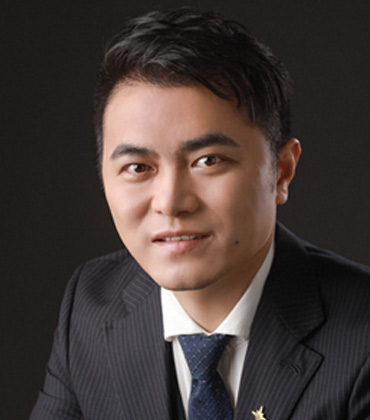
Cybersecurity Strategy for Global Consumer Products Company in China Market
James He, Cyber security Director, L'Oréal

Securing Digital Frontiers through Cyber Risk Management
Wahyu Agung Prasetyo, IT and Cyber Risk Management Head, Bank Mega [IDX: MEGA]

Navigating the Landscape: Insights in the Enterprise Security Domain
Fabian Schramke, Sr. Director Security Engineering and Operations, Newrez LLC

The Shift from Cybersecurity to Product Security: A Business Imperative
Peter Wong, Head of Information Security and Compliance, APAC, Edenred

Revolutionizing Cybersecurity in the Cloud: Harnessing AI for Unprecedented Protection
Ts. Lip Kar Lock, Head of Digital & Big Data Management | Big Data Analytics, Air Selangor

People, Process, Technology: Keys to Fighting Cyber Threats
Wilson Wong, Vice President of Cyber Security, the Venetian Macao


IN FOCUS

Guarding the Grid: Data Solutions Driving APAC Forward
Data security has become a core priority across the Asia-Pacific (APAC) region, driven by the rapid growth of digital services and the rising value of information assets. Organizations are rethinking their security strategies to address complex regulatory landscapes, evolving cyber threats, and increased reliance on cloud-based operations. The focus has shifted from isolated protective measures to comprehensive, proactive frameworks that safeguard data across diverse environments.

Multi-Factor Authentication Trends in APAC: Driving Security and Compliance
Multi-factor authentication (MFA) has emerged as a critical component of cybersecurity in the APAC region. The growing reliance on digital services, online banking, and mobile transactions has heightened the need for stronger identity verification methods. Organizations recognize that single-password systems are insufficient in the face of increasingly sophisticated cyberattacks. MFA addresses this vulnerability by requiring multiple layers of verification, enhancing security while ensuring a smoother user experience. Businesses across various industries are investing in MFA to protect sensitive data and build customer trust in digital interactions.
EDITORIAL
The Intelligent Guardrails for a Data-Driven World
The age of static defenses is over. Firewalls, patch cycles, and perimeter thinking once defined security; now they feel like relics. In today’s world, attackers move at machine speed, and defenders who cling to the old playbook risk irrelevance. Data security is no longer about walls but about velocity, context, and adaptive intelligence.
Two tectonic shifts stand out. First is intelligence. AI-powered platforms are moving past the role of traffic cops, no longer just flagging suspicious behavior. They are interpreters. They explain why a pattern matters, which process it threatens, and how the danger could ripple through a system. Security teams once lost in the noise now work with clarity: real-time insights stitched across cloud stacks, SaaS tools, and IoT networks. The promise isn’t more alerts— correlation, prioritization, and unified response.
The second shift is encryption’s reinvention. For decades, it guarded data at rest and in transit. Today, it reaches deeper—into use itself—through confidential computing that shields workloads even from the host. Governments and enterprises, especially in APAC, are no longer waiting for quantum threats to arrive. They are auditing algorithms, preparing for cryptographic migration, and treating quantum-safe encryption as tomorrow’s baseline, not a distant project.
This convergence, AI-driven intelligence and next-generation encryption, is happening in live fire. As deepfake deception grows and AI-driven threats accelerate, APAC is already testing unified security platforms and shaping regulatory frameworks that others will follow. No wonder the region’s data security market will exceed $66 billion by 2028, climbing at a steady 8.3 percent CAGR.
The magazine features a thought-provoking article by Charmaine Valmonte, FVP & Chief Information Security Officer, Data Protection Officer at Aboitiz Group and Silvia Lam Ihensekhien, Director of Information Security and Risk Management at Swire Coca-Cola.
We hope this edition offers insights that help business and security leaders adapt to evolving threats, embrace more innovative protection strategies and stay ready for what’s ahead in a world where data risks and opportunities are changing faster than ever.
