THANK YOU FOR SUBSCRIBING
× 
Enterprise Security Mag Weekly Brief
Be first to read the latest tech news, Industry Leader's Insights, and CIO interviews of medium and large enterprises exclusively from Enterprise Security Mag

Guarding the Grid: Data Solutions Driving APAC Forward
Enterprise Security Magazine | Tuesday, November 04, 2025
Data security has become a core priority across the Asia-Pacific (APAC) region, driven by the rapid growth of digital services and the rising value of information assets. Organizations are rethinking their security strategies to address complex regulatory landscapes, evolving cyber threats, and increased reliance on cloud-based operations. The focus has shifted from isolated protective measures to comprehensive, proactive frameworks that safeguard data across diverse environments.
Regional Shifts in Data Protection Strategy
The Asia-Pacific (APAC) region is undergoing a strategic transformation in how data security is perceived and implemented. With digital services expanding across sectors such as finance, healthcare, retail, and logistics, the volume of sensitive data circulating through networks has increased. This has elevated data security solutions from a support function to a critical business continuity and trust element. Organizations are aligning their data protection strategies with broader digital goals, integrating security into every stage of digital infrastructure, from endpoint devices to cloud environments.
Stay ahead of the industry with exclusive feature stories on the top companies, expert insights and the latest news delivered straight to your inbox. Subscribe today.
Public and private entities increasingly invest in real-time security intelligence, automated threat detection, and encryption standards. Adopting cloud computing and remote work structures has further accelerated the demand for scalable and agile security platforms. There is a growing preference for unified threat management systems that consolidate protection across hybrid IT environments. Regional policy shifts and cross-border data governance have created a heightened awareness of compliance, influencing the procurement of security solutions that can adapt to multiple regulatory conditions.
Cyber resilience is becoming a top consideration for business leadership, prompting deeper collaboration between security teams, risk managers, and compliance officers. Across APAC, this interconnected approach is fostering greater integration between information security and operational technology systems. Data security is no longer a reactive process. It is being designed as a proactive framework that evolves alongside digital maturity.
Constraints and Corresponding Solutions
As data security solutions mature across the APAC region, several structural and operational challenges shape implementation strategies. A notable issue is the diversity of legal and regulatory environments across countries, which can complicate compliance efforts for regional organizations. To address this, modular security architectures are being deployed that can adjust to different regulatory frameworks without compromising overall integrity. These systems allow centralized management while accommodating country-specific controls, simplifying compliance across jurisdictions.
One challenge arises from the shortage of qualified cybersecurity professionals, particularly in fast-growing economies where demand often exceeds available expertise. This talent gap is being mitigated by adopting automation and artificial intelligence in security operations. Automated response systems, behavioural analytics, and AI-powered monitoring reduce the dependence on human intervention while increasing the accuracy and speed of threat detection.
Cloud migration also introduces concerns related to misconfigured environments and unauthorized access. To counter this, organizations are adopting zero-trust security models that require identity verification at every access point. These architectures are further supported by continuous monitoring tools that alert security teams to potential risks in real time. In hybrid cloud environments, segmentation and encryption protocols are layered to prevent unauthorized data exposure, even if perimeter defenses are breached.
Small and medium-sized enterprises face additional pressure due to limited budgets for robust cybersecurity frameworks. Many are turning to cloud-native security solutions with flexible subscription models that reduce upfront investment while delivering enterprise-level protection. These platforms offer integrated features such as intrusion detection, access control, and vulnerability scanning, making them accessible to businesses with lean operational structures.
Insider threats, accidental and intentional, continue to pose a significant risk. Organizations are increasingly implementing role-based access control and data usage monitoring tools to mitigate this. These tools ensure that employees only have access to the information necessary for their roles and flag unusual behavior patterns for immediate review. Regular awareness training helps create a culture of accountability and reduces the likelihood of internal security breaches.
Ransomware and advanced persistent threats are also concerns in the region. Endpoint detection and response systems and secure backup practices are widely adopted to prepare for such attacks to prepare for such attacks. These technologies enable rapid isolation of compromised systems and data restoration with minimal disruption, enhancing organizational resilience without relying solely on preventive measures.
Strategic Potential and Emerging Innovations
The APAC region holds significant potential for continued innovation in data security, driven by regulatory momentum and technological advancement. One of the most impactful developments is using AI and machine learning to enhance security orchestration. These technologies allow systems to identify patterns, anticipate risks, and respond autonomously to incidents, turning data protection into a predictive rather than reactive capability.
Another promising area is the application of blockchain technology in secure data handling. Blockchain’s decentralized and immutable structure provides a robust foundation for secure transactions and transparent data trails. This is particularly beneficial in sectors where auditability and tamper-proof records are essential, such as finance and supply chain management.
Data localization requirements across various APAC jurisdictions have encouraged the growth of regional data centers, which support compliance while enhancing performance and security. Localized encryption and key management services are also gaining popularity, offering organizations greater control over data without sacrificing accessibility. These advancements contribute to more sustainable and sovereign digital ecosystems, enabling secure growth within national boundaries.
Collaborative ecosystems involving technology providers, research institutions, and regulatory bodies further accelerate innovation. Joint initiatives are facilitating the development of region-specific tools and threat intelligence networks. These collective efforts strengthen the region’s capacity to respond to threats while promoting knowledge-sharing and standardization.
More in News
Digital identity has become a key component of modern enterprise operations as organizations increasingly depend on cloud platforms, digital services, and distributed workforces. Enterprises today require intelligent digital identity management solutions that can adapt to evolving cyber threats, complex user ecosystems, and strict regulatory requirements. AI-driven digital identity management solutions enable organizations to move beyond static, rule-based controls toward adaptive, context-aware identity frameworks that balance security, scalability, and user experience.
Enhanced Digital Identity Management: Balancing Security and Productivity
Smarter digital identity management focuses on establishing a unified and continuously updated view of users across the enterprise. Employees, contractors, partners, and customers interact with multiple systems, devices, and networks, generating vast amounts of identity-related data. AI-powered platforms analyze this data in real time to build behavioral baselines, detect anomalies, and dynamically assess risk. Rather than relying solely on usernames and passwords, modern identity solutions evaluate multiple contextual factors such as device health, access location, time of access, and historical behavior to make informed access decisions.
For enterprises, this intelligence delivers stronger security without sacrificing productivity. Automated identity lifecycle management simplifies onboarding, role transitions, and offboarding by ensuring access rights align with current responsibilities, reducing administrative overhead, limiting human error, and preventing access creep. Centralized identity visibility also strengthens governance by enabling consistent policy enforcement, faster audits, and improved compliance with global data protection and security regulations. By embedding intelligence into identity management, organizations can proactively reduce risk while supporting digital transformation initiatives with confidence.
Enterprises must align identity controls with evolving privacy and security requirements, including data access transparency and user rights. AI-driven identity platforms help organizations enforce least-privilege access, monitor sensitive data usage, and maintain detailed audit trails. For regulated enterprises, automated compliance reporting and continuous risk monitoring reduce operational burden while strengthening accountability and trust.
Scalable AI Identity Solutions for Secure Access Control
As enterprises expand across regions, business units, and digital environments, identity management systems must scale seamlessly. Scalable AI identity solutions are designed to support complex ecosystems spanning on-premise infrastructure, cloud platforms, SaaS applications, and hybrid environments. Traditional identity systems often struggle with this level of complexity, resulting in fragmented access controls and inconsistent security policies. AI-driven identity solutions address these challenges by automating access decisions and enforcing policies uniformly across the enterprise.
ML models continuously analyze access requests, user behavior, and contextual signals to enable risk-based access control. This dynamic approach allows access permissions to adapt to changing conditions rather than remaining static. For example, a user accessing a system from a trusted environment may experience frictionless access, while the same request from an unusual location or device may trigger additional verification. This adaptive access model strengthens security while maintaining a seamless user experience. Cyber Evolution | LECS uses behavioral analysis across network communications to identify anomalies, adding visibility as access conditions change. Scalability also extends to managing large and diverse identity populations. Modern enterprises may oversee millions of identities, including workforce users, privileged accounts, external partners, and customers. AI-powered identity platforms automate provisioning, access reviews, and certification processes at scale, reducing manual effort while maintaining compliance standards. Intelligent workflows prioritize high-risk access scenarios, enabling security teams to focus on what matters most.
Secure access control is further enhanced through continuous authentication and monitoring. Instead of making a single access decision at login, AI systems evaluate risk throughout the session. If risk levels change, the system can enforce step-up authentication, restrict access, or terminate sessions altogether. This continuous security model is critical for protecting sensitive data and defending against insider threats, compromised credentials, and advanced attacks. From a business standpoint, scalable AI identity solutions support rapid application adoption, global expansion, and organizational change without compromising security or control.
NetFoundry provides identity-based connectivity for modern distributed systems, supporting secure access across applications, devices, and AI workloads at scale.
Next-Generation AI-Driven Identity Management Platform
Next-generation AI-driven identity management platforms represent a shift from isolated security tools to fully integrated identity ecosystems. These platforms unify identity governance, access management, authentication, and analytics within a single solution. By leveraging artificial intelligence, identity management evolves from a reactive security function into a strategic enabler of enterprise agility and innovation.
AI models continuously learn from new data, improving their ability to detect anomalies, predict potential security incidents, and recommend remediation actions. This adaptive intelligence enables organizations to stay ahead of emerging threats and reduce their overall attack surface. Future-ready identity platforms are built for interoperability and flexibility. Open architectures and robust APIs allow seamless integration with enterprise applications, security tools, and emerging technologies. Whether supporting zero trust strategies, passwordless authentication, or evolving identity standards, AI-driven platforms provide the agility needed to align identity management with changing business and technology landscapes.
Compliance and governance are embedded directly into platform design. Automated policy enforcement, detailed audit trails, and real-time reporting simplify regulatory compliance across industries and regions. AI assists compliance teams by highlighting access anomalies, prioritizing high-risk identities, and streamlining certification processes, reducing operational burden while improving accuracy and accountability. ...Read more
The potential of blockchain technology to transform industries through decentralized, transparent, and secure systems has attracted a lot of attention. To fully realize the potential of this game-changing technology, creative solutions and teamwork are needed to overcome the obstacles that span the technological, regulatory, and operational domains. The scalability of blockchain is one of its biggest problems. Blockchain networks frequently find it difficult to handle a large number of transactions effectively, especially public ones like Ethereum and Bitcoin.
Another critical challenge is energy consumption, particularly for blockchains using PoW consensus mechanisms. Mining activities in such networks demand substantial computational power, leading to significant energy usage. It raises environmental concerns and makes blockchain networks less sustainable in the long term. Various blockchain platforms operate with distinct protocols, coding languages, and structures, making it challenging for them to interact seamlessly. The fragmentation creates silos and limits the potential for developing integrated blockchain ecosystems.
Regulatory uncertainty remains a major barrier to blockchain adoption, creating risks that can discourage investment and slow innovation. Organizations such as Twine support the development of secure frameworks that help address compliance and security challenges across evolving blockchain environments. Variations in regulatory approaches to cryptocurrencies and blockchain applications can introduce complexities, particularly for companies operating across multiple jurisdictions. Additionally, concerns around security and privacy persist, as blockchain systems, despite their resilience against tampering, are not entirely free from vulnerabilities.
Small and medium-sized enterprises (SMEs) often lack the financial and technical capacity to integrate blockchain into their operations. The steep learning curve of blockchain development can deter businesses from adopting the technology. Blockchain faces cultural and organizational resistance. The decentralized nature of blockchain challenges traditional business models that rely on centralized authority and control. Organizations are reluctant to replace existing systems with blockchain-based solutions, especially if the benefits are immediately unclear.
Heirloom Computing addresses regulatory uncertainty and security challenges to enable more reliable and compliant blockchain adoption across enterprise systems.
Legal and governance issues present significant challenges. Decentralized systems often lack clear governance structures, raising questions about accountability and decision-making. For instance, a supply chain application built on one blockchain may not easily exchange data with a financial application on another, hindering cross-industry collaboration and innovation. The lack of standardization and interoperability is another major hurdle for blockchain adoption. The uncertainties complicate the adoption of blockchain in industries with strict regulatory and compliance requirements. Its widespread adoption is hindered by scalability, energy consumption, regulatory uncertainty, and implementation complexity. ...Read more
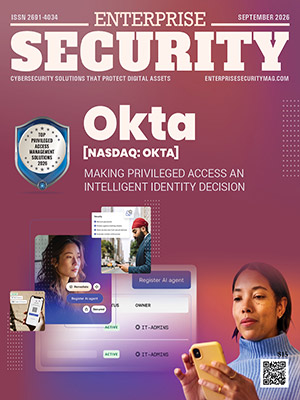
Companies are accelerating the adoption of privileged access management platforms as cyber threats grow more advanced and regulatory scrutiny intensifies. Organizations are leveraging automated credential rotation, session monitoring and AI-driven anomaly detection to secure high-risk accounts while reducing human error.
The shift toward cloud environments and hybrid IT infrastructures has amplified demand for real-time visibility and granular access control, making these platforms crucial for operational resilience. Despite integration challenges and evolving compliance requirements, businesses are increasingly turning to scalable and intelligent solutions that not only strengthen security posture but also streamline access governance across complex digital ecosystems.
Key Trends Shaping Privileged Access Management Platforms
The push toward zero-trust security models is transforming privileged access management platforms, with organizations demanding continuous verification and least-privilege enforcement. Adaptive authentication methods that adjust access based on context, such as device, location and behavior, are gaining popularity, helping companies reduce exposure without slowing operations. Integration with identity governance frameworks is also expanding, providing a holistic view of who can access sensitive systems and under what conditions.
Cloud adoption continues to redefine platform capabilities. As hybrid and multi-cloud environments become standard, solutions that provide seamless access across distributed infrastructures are increasingly vital. Real-time monitoring dashboards and automated alert systems are enabling IT teams to identify anomalies instantly, reducing the risk of breaches and accelerating response times. This trend is particularly pronounced where tech-driven enterprises are at the forefront of implementing sophisticated cloud security strategies.
Modern privileged access management platforms are increasingly defined by their use of artificial intelligence and machine learning. Predictive analytics can anticipate suspicious behavior and flag potential insider threats before they escalate. Pattern recognition algorithms are helping organizations refine policy enforcement and optimize resource allocation, ensuring that critical accounts remain protected without creating operational bottlenecks. This proactive approach is reshaping how companies approach digital risk management.
Regulatory compliance remains a driving force behind platform innovation. Organizations are navigating complex requirements such as data privacy mandates and industry-specific cybersecurity standards. Platforms that automatically log privileged activity, generate audit-ready reports, and enforce policy adherence are increasingly sought after, minimizing the administrative burden while strengthening overall governance. As regulations evolve, these solutions are becoming integral to meeting both internal and external security obligations.
Transformative Technologies in Privileged Access Management
Emerging technologies are redefining how privileged access management platforms operate, bringing deeper intelligence and automation into security workflows. Biometric authentication, including facial recognition and fingerprint verification, is becoming more integrated, adding a layer of identity assurance that complements traditional password-based systems. Combined with behavioral analytics, these methods enable continuous risk assessment, allowing systems to respond dynamically to unusual access patterns without disrupting legitimate operations.
Encryption and tokenization techniques are advancing rapidly, securing sensitive credentials both at rest and during transmission. Hardware-based security modules and cryptographic key management solutions are helping organizations protect critical assets against increasingly advanced cyberattacks. These tools not only reduce the risk of data breaches but also facilitate compliance with stringent industry and state-specific regulations, reinforcing trust across digital ecosystems.
Cloud-native architectures and API-driven integrations are further transforming platform capabilities. By enabling seamless interoperability between multiple IT environments and security tools, organizations can manage privileged accounts across on-premises, hybrid, and multi-cloud infrastructures more efficiently. Automated workflows powered by intelligent orchestration allow IT teams to handle complex access requests at scale while maintaining consistent security policies and audit readiness.
Real-time analytics combined with advanced reporting dashboards are giving security teams unprecedented visibility into user behavior and access trends. Machine learning models can detect anomalies early, predict potential insider threats, and recommend policy adjustments proactively. With these transformative technologies, privileged access management platforms are evolving into highly adaptive, predictive, and resilient systems designed to protect critical resources while supporting rapid business growth.
Future Prospects in Privileged Access Management Platforms
Privileged access management platforms are poised to become even more strategic to enterprise operations, extending beyond security into broader digital governance. Future developments are likely to focus on fully autonomous access controls, where AI-driven decision-making can grant or revoke privileges in real time based on evolving risk profiles. This shift will allow organizations to respond instantly to insider threats, compromised credentials, or unusual activity without manual intervention, reducing exposure while maintaining business continuity.
Incorporating emerging technologies like blockchain and decentralized identity systems is set to transform trust mechanisms. Immutable audit trails and distributed credential verification can enhance transparency and accountability across complex IT environments, making compliance reporting more efficient and reliable. Combined with predictive analytics, these tools will help organizations anticipate vulnerabilities before they materialize, turning reactive security processes into proactive risk management strategies.
Sustainability and operational efficiency are also shaping the outlook. Energy-efficient infrastructure, cloud optimization, and consolidated access management are expected to reduce resource consumption while supporting large-scale deployment. As organizations continue to digitize operations, the next generation of privileged access management platforms will balance security, scalability, and environmental responsibility, positioning them as essential enablers of secure, resilient, and future-ready digital ecosystems. ...Read more
A remote connection can turn a single compromised credential into direct access to the software that runs billing, scheduling, production or customer service. The purchasing decision, therefore, extends beyond whether employees can log in from another location. Executives must judge how the software controls entry to application servers and whether the delivery model fits the economics of the business.
Access architecture deserves scrutiny. Some platforms expose full desktops when a user needs only one business application, creating a broader attack surface and more support work than necessary. Application publishing can narrow that exposure while allowing a centrally hosted programme to reach distributed users. Browser access also matters where contractors or employees use mixed devices and cannot install a dedicated client. A practical suite should give IT teams control over what is published and how each user connects without forcing a redesign of the underlying Windows environment. It should also preserve familiar application behaviour, since remote access loses value when latency or awkward navigation pushes staff back toward local workarounds.
Security cannot sit beside remote access as a loosely connected product. Internet-facing servers attract repeated login attempts, stolen credentials, automated scans and traffic from locations where the company has no legitimate users. Controls such as geographic restrictions and automated blocking can reduce unnecessary exposure before an attacker reaches the application. Simplicity is part of the security test. A policy that requires specialist knowledge for every adjustment will be applied unevenly, particularly across smaller IT teams or distributed server estates. Buyers should test whether common restrictions can be configured quickly and understood without relying on outside specialists.
“TSplus Advanced Security’s software-led deployment model supports direct testing before purchase, while geographic access controls provide a clear way to restrict avoidable connection attempts.”
Management burden becomes more visible after deployment. Centralising an application can replace repeated workstation installations and make updates easier to govern, but the advantage disappears if administrators lack clear server health information or must switch among unrelated consoles. Monitoring should help teams identify performance issues before users report them. Remote support should also fit the same working model, giving technicians a direct way to assist users without adding a separate access stack. Clear alerts and usable reporting matter more than a large volume of raw telemetry.
Commercial structure can be just as important as technical fit. Per-user pricing may look manageable during a pilot and become difficult to defend as adoption expands. Buyers should compare perpetual and subscription options, support terms, renewal conditions and the cost of adding security later. Trial access is useful because it exposes installation effort and day-to-day administration before a broader commitment. The strongest evaluation is not a feature checklist but a controlled test using the company’s own applications and server policies.
TSplus Advanced Security is a strong choice for organisations that want remote application delivery without separating access, protection, support and administration into unrelated purchases. The wider TSplus suite combines Remote Access for Windows application publishing with Advanced Security for server protection. Its Remote Support and Server Monitoring extend the same environment into user assistance and infrastructure oversight. Its software-led deployment model supports direct testing before purchase, while geographic access controls provide a clear way to restrict avoidable connection attempts. For buyers prioritising application access and manageable server security under firm cost limits, TSplus merits serious consideration. ...Read more