
THANK YOU FOR SUBSCRIBING
× 
Enterprise Security Mag Weekly Brief
Be first to read the latest tech news, Industry Leader's Insights, and CIO interviews of medium and large enterprises exclusively from Enterprise Security Mag
Enterprise Security Magazine

OutsourcedCISO
The Trust Layer Behind Smarter Security Decisions

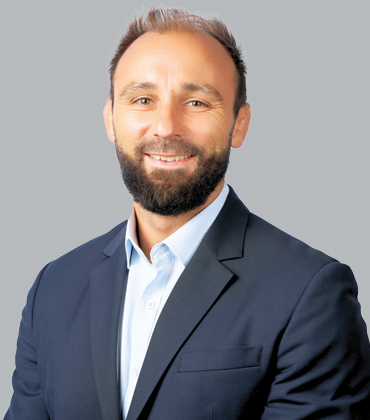 Maxime Cousseau, vCISO / CEO
For organisations facing that challenge, OutsourcedCISO offers an alternative, providing senior security expertise on a flexible basis so companies can bring experienced leadership into the decisions that require it without building a full-time function around it.
“We help businesses make better cybersecurity decisions while giving them a clear overview of where they stand in terms of maturity across every single aspect of cybersecurity, from governance through recovery,” says Maxime Cousseau, CEO of OutsourcedCISO.
OutsourcedCISO first understands the business, its stakeholders, obligations, limitations, and threats that could affect its operations. These conversations reveal how teams communicate and decide. OutsourcedCISO adapts guidance to that culture rather than imposing a fixed model. This structured discovery adds context before moving into specific cybersecurity functions.
The company takes a holistic view of the infrastructure, looking beyond systems the organisation already knows about. Threat modelling maps risks to business consequences, such as system shutdowns or sensitive data theft, while compliance, regulatory, contractual, and third-party requirements are also considered.
This business-first perspective gives the company a foundation for risk management. Technical vulnerabilities can mean little to a board until leaders understand the business impact. OutsourcedCISO therefore converts vulnerabilities into business risks and explains them in plain English. The aim is to give decision-makers context to determine whether a risk requires attention and what action is appropriate. When a business does not follow a recommendation, the decision is documented in the risk register so leadership retains visibility into accepted risk.

We help businesses make better cybersecurity decisions while giving them a clear overview of where they stand in terms of maturity across every single aspect of cybersecurity, from governance through recovery.

Working that closely with a leadership team takes time, which is why OutsourcedCISO caps the number of clients it takes on.
"We set out to help a select number of organisations properly rather than take on volume. Quality has mattered to us from day one, and it is why clients stay with us for years," says Cousseau.
Turning Cyber Risk into Clear Business Decisions
The same principle shapes its security assessment approach. Businesses can face a long list of options, from vulnerability scans to penetration tests and red-team exercises, while lacking reliable advice on which assessment fits a particular need. OutsourcedCISO describes its role as a trust layer, helping companies avoid treating security as a product purchase and identify the service, timing, and budget required to address specific business risks. The company is vendor-independent: it does not resell products or earn commissions, so its advice is driven only by what reduces a client's risk. That role is particularly relevant for mid-sized businesses that can find the wider security ecosystem difficult to assess.
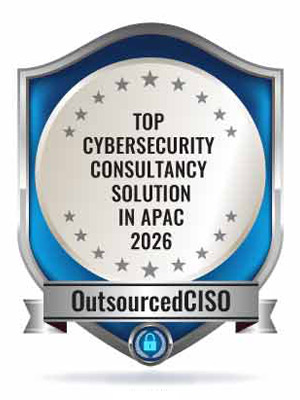
One client sought ISO/IEC 27001 certification and SOC 2 attestation. OutsourcedCISO first defined the scope, identified stakeholders, explained framework requirements across departments, and proposed remediation plans. The client then moved onto an ongoing weekly retainer. The recognition as Top Cybersecurity Consultancy Solution in APAC for 2026 adds another marker of the company's work in the sector offering a direct view of how its work translates into results.
After receiving multiple requests about governing AI agents, OutsourcedCISO recently introduced its AI Agent Discovery & Governance solution, which discovers AI agents across an organisation and governs them over time. It records agents, business owners, permissions, and authorisations, then raises alerts when activity changes. This addresses shadow AI while giving businesses visibility into what autonomous agents can access and do.
As AI agents become part of everyday operations, the harder question for businesses may not be what they can secure, but what they can actually understand. For OutsourcedCISO, stronger cybersecurity begins with making risk visible in business terms, advising leaders on what to address and documenting accepted risks. That clarity keeps security decisions connected to how the business operates and becomes the most valuable security control of all.
Matching Cybersecurity Leadership to Business Risk
A board can receive a long vulnerability report and still lack an answer to the question that matters most. Which exposures can disrupt the business, and which deserve funding now? Security programs often accumulate scanners and assessments without resolving whether controls cover the full environment or materially reduce exposure. Cybersecurity consultancy has to close that gap before it adds more technical work. The buying decision is complicated by a crowded service menu. Penetration testing may be useful, but it is not a substitute for deciding whether identity controls or recovery planning deserve attention first. Without that prioritization, assessment activity can outpace risk decisions.
Useful advisory work begins by mapping the business before prescribing an exercise. Infrastructure coverage matters, but conversations with finance, legal, technology and business owners can expose obligations that a system inventory misses. Contractual duties and regulatory requirements can change the priority of a weakness that looks routine in isolation. Threat modeling should connect plausible events to business impact rather than elevate every vulnerability equally. That gives executives a defensible basis for deciding where limited security budgets belong.
Board reporting needs a different language from technical remediation. Vulnerability scores may help security teams order work, yet they rarely tell directors what a weakness could mean for revenue, service continuity, contractual exposure or customer commitments. A consultant should convert technical findings into business risk, then make the decision path visible. Risk registers become especially useful when management accepts exposure or delays remediation. The record preserves ownership and gives leadership something concrete to revisit rather than allowing unresolved findings to disappear into technical backlogs.
“Outsourced CISO’s work converts technical findings into business risk and records accepted exposure in a risk register, giving leadership a clearer basis for security decisions.”
Assessment depth should follow the problem, not the consultant’s service catalog. A vulnerability scan and a red-team exercise answer different questions. Cloud providers and external technology partners can also change where exposure sits, making a familiar assessment inadequate for the actual environment. Executives need advice on whether an assessment fits the risk, along with a realistic view of the effort required. Overspending on an elaborate exercise can be as unhelpful as running a light assessment against the wrong risk.
The engagement model also has to fit staffing economics. A company may need senior security leadership every week without enough work or budget to justify a full-time CISO. Virtual leadership can address that gap if it preserves ownership between meetings and maintains follow-through when recommendations are not adopted. Culture matters here. Security advice that ignores how managers communicate or approve change can stall even when the technical recommendation is sound.
Outsourced CISO fits that buying logic through a virtual CISO model that begins with stakeholder conversations and a broad review of the business environment. It maps business threats against systems and obligations, then helps determine which security assessment is appropriate rather than defaulting to a fixed exercise. Its work converts technical findings into business risk and records accepted exposure in a risk register, giving leadership a clearer basis for security decisions. The consultancy also extends this governance approach to AI agents by discovering their presence and maintaining records of each agent’s owner and authorized permissions. Changes outside those boundaries triggers alerts for review. For firms that need senior security judgment without a full-time hire, that combination makes Outsourced CISO a practical choice for ongoing cybersecurity guidance.
...Read more
Company
OutsourcedCISO
Management
Maxime Cousseau, vCISO / CEO
Description
OutsourcedCISO is a cybersecurity consultancy that gives businesses strategic security leadership without requiring a full-time CISO. It assesses cybersecurity maturity, identifies risks across the business ecosystem, advises on appropriate security assessments, translates technical vulnerabilities into business risks, and supports compliance, governance, and AI security needs.
