THANK YOU FOR SUBSCRIBING
× 
Enterprise Security Mag Weekly Brief
Be first to read the latest tech news, Industry Leader's Insights, and CIO interviews of medium and large enterprises exclusively from Enterprise Security Mag

Strengthening Cloud Security with Data Loss Prevention
Enterprise Security Magazine | Monday, July 27, 2026
FREMONT, CA: Cloud Data Loss Prevention (DLP) is essential for securing sensitive data across cloud environments and protecting critical information from unauthorised access, breaches, and accidental exposure. Protecting sensitive information is paramount, and more businesses are adopting cloud computing for its scalability, flexibility, and cost-efficiency. DLP protects by monitoring, identifying, and controlling data flows, ensuring data integrity and compliance with security regulations.
The Role of Cloud DLP
Cloud DLP solutions are comprehensive and adaptable in their approach, making them critical for organisations that store, process, and manage large volumes of data on cloud platforms. These solutions monitor data in three states: at rest, in motion, and use. By analysing and inspecting data in these various states, DLP systems can detect sensitive information, such as credit card numbers or social security numbers, and prevent it from leaving the organisation's cloud environment without proper authorisation.
Stay ahead of the industry with exclusive feature stories on the top companies, expert insights and the latest news delivered straight to your inbox. Subscribe today.
Cloud DLP systems play a proactive role in preventing data loss across cloud environments, where risks may arise from employee negligence, insider threats, external cyberattacks, or misconfigured services. Solutions such as Allstate Identity Protection strengthen data security by enhancing the detection of sensitive information through adaptive threat monitoring across cloud infrastructures. These systems also rely on encryption, tokenisation, and robust access controls to ensure that sensitive data remains protected within the organization and during external sharing.
Key Features of Cloud DLP
Data Classification and Discovery: This process involves scanning cloud services to locate sensitive data like PII, intellectual property, and financial records. It categorises data based on sensitivity, allowing for appropriate handling measures. Once classified, security protocols are applied to protect and monitor the data, ensure compliance with regulations and maintain data control. Proper classification enables the development of protection strategies tailored to the data's risk level, minimising potential threats.
Resolve Tech Solutions delivers cloud data security services that mitigate loss risks through advanced monitoring and protection frameworks.
Monitoring and Anomaly Detection: Cloud environments to identify suspicious activities such as unauthorised access or unusual data transfers. By analysing patterns, potential threats generate activities and allow immediate action. Automated responses like data transfer blocking or encryption help mitigate risks. This system prevents breaches and minimises damage by addressing threats early.
Data Encryption: Secures sensitive data by converting it into unreadable formats through algorithms, ensuring only authorised users with decryption keys can access it. It is applied to data in transit, at rest, and in use, protecting it from unauthorised access even if compromised. Encryption is critical for maintaining data confidentiality across cloud platforms, as it adds a robust security layer.
Access Control and Policy Enforcement: This system defines rules restricting data access based on user roles or departments. Organisations enforce policies that specify who can handle certain types of data. Continuous monitoring ensures compliance, with alerts triggered for any policy violations. It maintains privacy and regulatory compliance by restricting sensitive data access to authorised personnel only.
Data Masking and Redaction: When shared externally, sensitive data is anonymised using masking and redaction techniques to protect essential information like credit card numbers or personal identifiers while leaving other data accessible. Data masking allows workflows to continue without exposure risks, and redaction ensures only necessary information is shared. These techniques enhance data security during sharing and processing.
Compliance Support: These systems help organisations adhere to regulatory standards such as GDPR, HIPAA, and PCI DSS. Sensitive data is identified and protected according to legal requirements, reducing non-compliance risk. Automated policies ensure adherence, and audit trails demonstrate compliance. Reports generated by the system assist in managing regulatory obligations and preventing penalties related to data protection.
As organisations continue to move their data and operations to the cloud, implementing Cloud Data Loss Prevention solutions becomes critical to their security strategy. Through features like data classification, encryption, access control, and monitoring, Cloud DLP empowers organisations to safeguard their information against potential risks, both internal and external.
More in News
A board can receive a long vulnerability report and still lack an answer to the question that matters most. Which exposures can disrupt the business, and which deserve funding now? Security programs often accumulate scanners and assessments without resolving whether controls cover the full environment or materially reduce exposure. Cybersecurity consultancy has to close that gap before it adds more technical work. The buying decision is complicated by a crowded service menu. Penetration testing may be useful, but it is not a substitute for deciding whether identity controls or recovery planning deserve attention first. Without that prioritization, assessment activity can outpace risk decisions.
Useful advisory work begins by mapping the business before prescribing an exercise. Infrastructure coverage matters, but conversations with finance, legal, technology and business owners can expose obligations that a system inventory misses. Contractual duties and regulatory requirements can change the priority of a weakness that looks routine in isolation. Threat modeling should connect plausible events to business impact rather than elevate every vulnerability equally. That gives executives a defensible basis for deciding where limited security budgets belong.
Board reporting needs a different language from technical remediation. Vulnerability scores may help security teams order work, yet they rarely tell directors what a weakness could mean for revenue, service continuity, contractual exposure or customer commitments. A consultant should convert technical findings into business risk, then make the decision path visible. Risk registers become especially useful when management accepts exposure or delays remediation. The record preserves ownership and gives leadership something concrete to revisit rather than allowing unresolved findings to disappear into technical backlogs.
“Outsourced CISO’s work converts technical findings into business risk and records accepted exposure in a risk register, giving leadership a clearer basis for security decisions.”
Assessment depth should follow the problem, not the consultant’s service catalog. A vulnerability scan and a red-team exercise answer different questions. Cloud providers and external technology partners can also change where exposure sits, making a familiar assessment inadequate for the actual environment. Executives need advice on whether an assessment fits the risk, along with a realistic view of the effort required. Overspending on an elaborate exercise can be as unhelpful as running a light assessment against the wrong risk.
The engagement model also has to fit staffing economics. A company may need senior security leadership every week without enough work or budget to justify a full-time CISO. Virtual leadership can address that gap if it preserves ownership between meetings and maintains follow-through when recommendations are not adopted. Culture matters here. Security advice that ignores how managers communicate or approve change can stall even when the technical recommendation is sound.
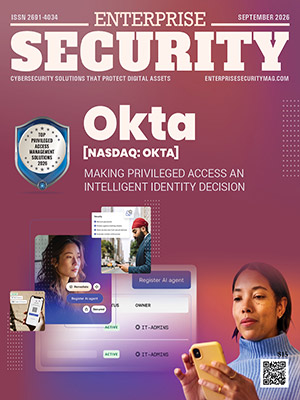
Outsourced CISO fits that buying logic through a virtual CISO model that begins with stakeholder conversations and a broad review of the business environment. It maps business threats against systems and obligations, then helps determine which security assessment is appropriate rather than defaulting to a fixed exercise. Its work converts technical findings into business risk and records accepted exposure in a risk register, giving leadership a clearer basis for security decisions. The consultancy also extends this governance approach to AI agents by discovering their presence and maintaining records of each agent’s owner and authorized permissions. Changes outside those boundaries triggers alerts for review. For firms that need senior security judgment without a full-time hire, that combination makes Outsourced CISO a practical choice for ongoing cybersecurity guidance. ...Read more
Cybersecurity leaders no longer evaluate multi-factor authentication as a narrow login control. It now sits at the center of trust because the network perimeter has been replaced by cloud applications, remote access, mobile users and third-party services. Attackers have adapted. Rather than defeating infrastructure directly, they target the human identity layer through phishing, fake websites, credential reuse, session interception and social engineering. AI has sharpened deception, weakening legacy assumptions about passwords, one-time codes and user vigilance.
Traditional MFA can reduce some exposure, but it often preserves the weakness it is meant to protect. A password remains in the path, a user still has to recognize a fraudulent prompt, a code may still be entered into a hostile session and the burden of correctness often sits with the individual. For executives, this is not just a security design problem. It becomes a cost, productivity and confidence problem. Help desks carry reset volume, employees navigate repeated prompts, customers abandon frustrating processes and fraud teams absorb losses when authentication stops at login but fails to control sensitive actions after access is granted.
The stronger path removes static credentials from daily use rather than hiding them behind more steps. It should make trust mutual, so the service proves itself to the user before the user approves the session. It should also extend beyond login, because access to payroll, funds transfer, privileged systems or sensitive records requires authorization tied to the verified person, not just an earlier sign-in. Biometric confirmation, device trust, cryptographic validation and context-aware checks matter most when they reduce the chance that a stolen credential, copied website or compromised session can become real damage.
Adoption depends just as much on usability. Security teams have spent years asking users to remember, rotate, reset and protect secrets while interpreting security cues under pressure. That model does not scale across banking customers, public-sector users, field employees, shared workstations, legacy applications and VPN access. The right approach should simplify the act of proving identity, accommodate users with different levels of digital confidence and integrate across environments that cannot all be rebuilt. Simplicity is not softness. It is the discipline of reducing unnecessary steps while preserving proof, control and auditability.
Executives should also look for coverage that matches enterprise reality. A solution that works only for new cloud applications can leave exposed systems behind. One that requires broad redesign can slow adoption. One that replaces a single password burden with multiple disconnected authentication paths can dilute governance. The benchmark is a consistent identity experience across cloud, desktop, VPN, legacy, shared and constrained environments, backed by implementation support that lets security leaders test, train and expand without disrupting users.
Password Free emerges as the premier choice for organizations that want MFA to move from layered passwords toward true password elimination. Its differentiator is full duplex authentication, in which the service validates itself to the user before the user confirms identity through a matched image, short code and biometric approval. That design addresses phishing, imposter websites and one-way code entry. Its website scope reinforces the fit through passwordless authentication, Windows Hello extension and coverage across cloud, desktop, VPN, legacy, shared and air-gapped systems. For buyers prioritizing trust, broad reach and user simplicity, Password Free offers the clearest path forward. ...Read more
Expanding urban security requirements and increasing digitisation across public and private infrastructure are reshaping surveillance deployment strategies across multiple sectors. Within this environment, IP camera video surveillance systems are witnessing stronger adoption as organisations prioritise real-time monitoring capabilities, intelligent video analytics, and remote accessibility across connected security networks.
In Europe, rising emphasis on infrastructure protection, transportation monitoring, and commercial facility security is encouraging broader integration of high-resolution imaging systems, cloud-connected surveillance architecture, and AI-assisted motion detection technologies to improve situational awareness and operational responsiveness.
Meanwhile, managing large-scale data storage, cybersecurity vulnerabilities, and system interoperability continues to create operational complexity for surveillance operators handling expanding camera ecosystems. In response, organisations are increasingly adopting encrypted transmission frameworks, edge-based processing models, and centralised video management platforms designed to improve monitoring efficiency while strengthening data protection and network reliability across modern surveillance environments.
How Do IP Camera Video Surveillance Systems Improve Security?
IP camera video surveillance systems are enhancing modern security operations by improving visibility across high-traffic areas and supporting faster identification of potential incidents. Continuous visual monitoring across commercial facilities, transportation networks, industrial environments, and public infrastructure is enabling security teams to respond more effectively to threats and operational challenges. In this evolving landscape, Versasec supports secure identity and access management practices that strengthen authentication and controlled access within connected security environments. In Europe, growing adoption of digitally integrated security frameworks is also enabling more coordinated monitoring across large and geographically distributed locations.
Another major benefit lies in the ability to support accurate incident verification and evidence management during security investigations. High-definition image capture and time-synchronised recording capabilities are improving the reliability of surveillance documentation, helping organisations review events with greater clarity and precision. Improved monitoring continuity is also contributing to stronger access control management and more effective supervision of restricted or sensitive operational zones.
EaseAudio develops audio system integration, algorithm development, and acoustic tuning solutions supporting connected devices and automotive applications.
IP camera video surveillance systems are further enhancing operational security by supporting proactive risk management and more informed decision-making processes. Integration with automated alert systems and remote supervisory controls is helping organisations improve response coordination during emergencies and reduce delays in security intervention. As safety expectations continue to evolve across infrastructure networks in Europe, surveillance systems are becoming increasingly important in supporting secure, responsive, and efficiently managed operational environments.
What is the Future Outlook of IP Camera Video Surveillance?
The future direction of IP camera video surveillance is expected to centre on more intelligent, adaptive, and closely integrated security ecosystems where visual monitoring works in sync with broader digital infrastructure. Advances in machine-led interpretation of video feeds are likely to refine how security patterns are detected and prioritised, reducing reliance on manual oversight while improving responsiveness to dynamic situations. Increasing convergence with connected urban systems and enterprise networks in Europe is also expected to support more coordinated surveillance environments that function across multiple operational layers rather than isolated setups.
Alongside this, emphasis on data governance, system resilience, and energy-efficient processing is shaping the evolution of surveillance architecture, with a growing focus on designs that balance high-performance monitoring with responsible handling of large-scale visual data across expanding security landscapes. ...Read more
MELVILLE, N.Y. - June 22, 2026 - Intellicheck, Inc. (Nasdaq: IDN), an industry-leading identity company delivering proprietary on-demand digital and physical identity validation solutions, today announced that it has joined the Russell 2000 ® and Russell 3000 ® Indexes effective upon the U.S. market close on June 26, 2026.
The Russell 2000 ® Index is widely used by investment managers and institutional investors as a leading benchmark for small-cap U.S. companies. Membership in the Russell 2000 ® Index results in automatic inclusion in the Russell 3000 ® Index and the applicable Russell growth and/or value style indexes, as determined by FTSE Russell's style methodology.
"We are pleased to join the Russell 2000 ® and Russell 3000 ® Indexes. This milestone reflects Intellicheck's continued growth and execution. We continue to expand across key market verticals, most notably banking, credit issuance, automotive, and title insurance. Our SaaS business model is designed to support scalable growth and long-term shareholder value. We believe inclusion in these indexes will increase our visibility among institutional investors and broaden awareness of the significant opportunity ahead," said Intellicheck CEO Bryan Lewis.
Intellicheck provides both digital and physical identity verification solutions to industries where speed and certainty is crucial. Intellicheck’s proprietary approach to proving identity is unique. It enables a frictionless customer experience that seamlessly fits into current workflows using existing technology, scanning devices or Intellicheck’s mobile app. This creates a competitive advantage for every business by facilitating rapid customer acquisition and on-going customer retention with minimal implementation costs.
The annual Russell U.S. Indexes reconstitution ranks eligible U.S. companies by total market capitalization as of the rank date. Russell indexes are widely used by investment managers and institutional investors for index funds and as benchmarks for active investment strategies. ...Read more
-1.jpg "Click Above To Go to Digital Version")