

enterprisesecuritymag

Enterprise Security Magazines : News

Cyber risk assessment in Canada is moving beyond periodic checklists and static vulnerability scans. As digital systems become more connected across cloud platforms, remote work environments and third-party ecosystems, the old approach to testing no longer provides enough visibility. Organizations need to understand not only where weaknesses exist but also how those weaknesses could be exploited in realistic attack scenarios. This shift is one reason AI-powered penetration testing solutions are becoming an important part of modern security strategies. Traditional penetration testing has always played a key role in uncovering exploitable gaps across networks, applications and infrastructure. However, it has often been limited by time scope and manual effort. A test may provide a useful snapshot of risk at one moment, but cyber threats do not stand still. Attack methods change quickly, and new exposures appear as systems evolve. In the Canadian business environment, where financial institutions, public sector bodies, healthcare organizations and critical infrastructure operators all face rising cyber pressure, risk assessments must become more adaptive and continuous. Why are cyber risk assessments changing in the AI era? Modern risk assessments are no longer focused only on identifying known vulnerabilities. They are increasingly designed to understand how threat actors move through an environment, which assets are most exposed, and where business disruption could occur. AI is accelerating this transition by helping penetration testing teams simulate attacks with greater speed, depth and context. AI tools can analyze large environments faster than a manual team working alone. They can map attack surfaces, identify likely paths of exploitation, and prioritize weaknesses based on how an attacker would actually use them. This changes the value of a penetration test. Instead of producing a long list of findings with equal weight, the assessment becomes more focused on business impact and real-world exploitability. In Canada, this matters because cyber risk management is becoming more closely tied to operational resilience, privacy obligations and third-party oversight. Organizations are expected to understand the risks that compromise their systems and supply chains, rather than only at the perimeter. How are AI-Powered Penetration Testing Solutions Improving Decision-Making? The biggest advantage of AI-powered penetration testing solutions is not simply automation. It is the ability to turn testing into an ongoing intelligence function rather than a one-time exercise. AI can help correlate findings across applications, endpoints, identities and cloud assets, so teams gain a clearer picture of how multiple weaknesses combine into a single meaningful threat path. This improves cyber risk assessments in practical ways. Security leaders can prioritize remediation based on attack feasibility rather than guesswork. Boards and executives receive clearer insight into exposure. Internal teams can validate whether security investments are actually reducing risk in the areas that matter most. As Canadian organizations continue to strengthen cyber resilience, the role of penetration testing is expanding. It is no longer just a technical checkpoint before an audit or compliance review. With AI in the process, it becomes a more dynamic way to measure resilience, anticipate attacker behavior and make cyber risk assessment a living part of business decision-making. ...Read more
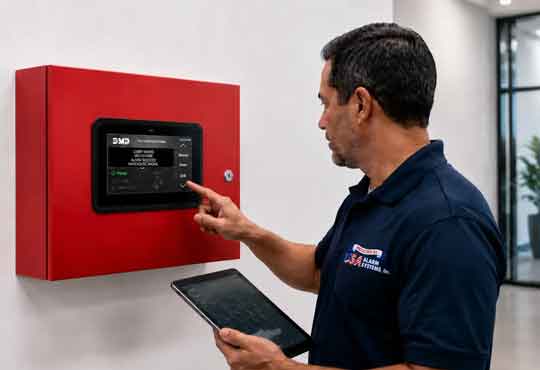
Security, access control, and efficiency are some of the key factors that are increasingly becoming important in residential neighborhoods, commercial buildings, industries, and public utilities. Organizations and proprietors must find solutions to facilitate access and entry to such places with ease and safety. There are automated gate systems that have been developed using advanced technology and automation processes. These automated gate systems can be integrated with security systems, access control devices, surveillance cameras, and communication systems to achieve efficient access control solutions. How Do Automated Gate Systems Improve Security and Access Control? The primary purpose of automated gate systems is to control access to certain areas and prevent unauthorized persons or vehicles from reaching them. While manual gates need to be operated, automated systems operate with electronic controls, sensors and communication technologies. Security is one of the foremost advantages of automatic gate systems. Access can be controlled by key cards, access codes, radio-frequency identification (RFID) tags, biometric authentication, or mobile applications. These access control mechanisms minimize the possibility of unauthorized access and ensure that there are accurate records of access activity. Automated gate systems come with surveillance cameras and security monitoring systems. This integration makes it possible to monitor the entry points in real-time and to be able to check visitors before granting access. The video footage can also be used to enhance investigations and security audits, if necessary. The installation of automated gates enhances the efficiency of operations, eliminating the need for human intervention. Automated verification processes allow vehicles to come in and out of residential communities, businesses, warehouses and industrial facilities faster. This helps minimize delays while maintaining appropriate security measures. What Factors Are Driving the Adoption of Automated Gate Systems? Modern automated gate systems can now be connected to a wider building management system, enabling their access to be controlled remotely using a mobile device and/or a centralized control system. This connectivity facilitates flexibility and convenience in operations. Technology advancements keep adding system functionality, such as automated gate solutions becoming more effective with the use of artificial intelligence, cloud-based management platforms, license plate recognition and advanced analytics. These technologies aid quicker identification, better monitoring and better security decision-making. Automated gate systems are also being installed in transportation facilities, government buildings, parking structures and critical infrastructure sites. Such applications provide secure working and facilitate the flow of authorized persons and visitors, and remain a vital tool for access control. ...Read more
A board can receive a long vulnerability report and still lack an answer to the question that matters most. Which exposures can disrupt the business, and which deserve funding now? Security programs often accumulate scanners and assessments without resolving whether controls cover the full environment or materially reduce exposure. Cybersecurity consultancy has to close that gap before it adds more technical work. The buying decision is complicated by a crowded service menu. Penetration testing may be useful, but it is not a substitute for deciding whether identity controls or recovery planning deserve attention first. Without that prioritization, assessment activity can outpace risk decisions. Useful advisory work begins by mapping the business before prescribing an exercise. Infrastructure coverage matters, but conversations with finance, legal, technology and business owners can expose obligations that a system inventory misses. Contractual duties and regulatory requirements can change the priority of a weakness that looks routine in isolation. Threat modeling should connect plausible events to business impact rather than elevate every vulnerability equally. That gives executives a defensible basis for deciding where limited security budgets belong. Board reporting needs a different language from technical remediation. Vulnerability scores may help security teams order work, yet they rarely tell directors what a weakness could mean for revenue, service continuity, contractual exposure or customer commitments. A consultant should convert technical findings into business risk, then make the decision path visible. Risk registers become especially useful when management accepts exposure or delays remediation. The record preserves ownership and gives leadership something concrete to revisit rather than allowing unresolved findings to disappear into technical backlogs. “OutsourcedCISO’s work converts technical findings into business risk and records accepted exposure in a risk register, giving leadership a clearer basis for security decisions.” Assessment depth should follow the problem, not the consultant’s service catalog. A vulnerability scan and a red-team exercise answer different questions. Cloud providers and external technology partners can also change where exposure sits, making a familiar assessment inadequate for the actual environment. Executives need advice on whether an assessment fits the risk, along with a realistic view of the effort required. Overspending on an elaborate exercise can be as unhelpful as running a light assessment against the wrong risk. The engagement model also has to fit staffing economics. A company may need senior security leadership every week without enough work or budget to justify a full-time CISO. Virtual leadership can address that gap if it preserves ownership between meetings and maintains follow-through when recommendations are not adopted. Culture matters here. Security advice that ignores how managers communicate or approve change can stall even when the technical recommendation is sound. OutsourcedCISO fits that buying logic through a virtual CISO model that begins with stakeholder conversations and a broad review of the business environment. It maps business threats against systems and obligations, then helps determine which security assessment is appropriate rather than defaulting to a fixed exercise. Its work converts technical findings into business risk and records accepted exposure in a risk register, giving leadership a clearer basis for security decisions. The consultancy also extends this governance approach to AI agents by discovering their presence and maintaining records of each agent’s owner and authorized permissions. Changes outside those boundaries triggers alerts for review. For firms that need senior security judgment without a full-time hire, that combination makes OutsourcedCISO a practical choice for ongoing cybersecurity guidance. ...Read more