
THANK YOU FOR SUBSCRIBING
× 
Enterprise Security Mag Weekly Brief
Be first to read the latest tech news, Industry Leader's Insights, and CIO interviews of medium and large enterprises exclusively from Enterprise Security Mag
A featured contribution from Leadership Perspectives, a curated forum for enterprise security leaders, nominated by our subscribers and vetted by the Enterprise Security Magazine Editorial Board.

DEPO Ventures
Recession on the horizon. So why not invest in a startup?
This Lesson Is Known From Theory By Almost Everyone. When The Markets Are Down, The Best Portfolios Are Created. However, It Is Not Easy To Follow. Yet The Rule Applies To Investments In Stocks As Well As Promising Startups. During A Crisis And High Inflation, Money Should Not Lie On Accounts. Those Who Start Investing During A Crisis Always Make The Most Money. 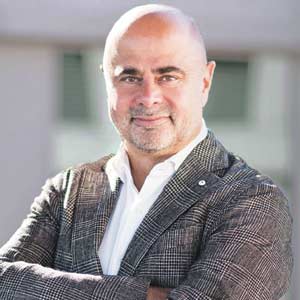 Petr Šíma, Partner, DEPO Ventures
However, there is a significant difference between investing in stocks and investing in startups. "It is difficult to hit the bottom with stocks and you have to tune your investment strategy in line with the market and buy gradually. When it comes to investments in startups, you do not have to pay as much attention to market fluctuations. When potentially profitable projects are emerging, access to them is better during a market downturn," says Petr Šíma, partner at DEPO Ventures.
Why? Last year, there was a huge excess of money on the markets. And startup founders were shuffling potential investors with pitchforks. Now there is less money. Even the founders of the most promising startups are prepared to negotiate more, they are more modest, and they do not expect a big valuation. Thanks to this, investors have a better chance of getting a good project. "When startups have a harder time accessing money, only the really good ones will be funded. In previous years, when there were a lot of investors on the market - and many of them didn't quite understand it - even the bad ones got money," says Šíma.
Big American investors say that the market has now lost the tourist investors. Those who heard that investing in startups is cool, but didn't understand it very well. "And that's good for the market," says Šíma. When the cycle turns and the crisis subsides, the economy will be in a boom and these good projects will be looking for new investors or will be sold for multiple times the amount of money. Just like with stocks, it doesn't make sense to invest in a startup at its peak. It's expensive and at the same time, it's likelythat when the startup is launching its next investment round or is for sale, a recession will happen. In the long run, investments in startups belong to the most profitable classes of assets, outperforming all other investments in securities, including riskier hedge funds.
Bet On Future Success
The current cooling also represents a significant opportunity for emerging technology companies according to Šíma. "People are suddenly open to new solutions, something needs to be addressed that currently troubles them. And someone who comes with a cheaper or more efficient solution is likely to succeed. At the moment when everything is going well, everything is established and nothing needs to change, startups paradoxically have it a little worse because there are not as many holes in the market for them to go into," says Šíma.
“Investors Must Also Be Aware That Investments In Technology Are Illiquid And Cannot Be Easily Sold. It's Not A Game For A Few Weeks Or Months, But Rather For Years”
Warren Buffett invests in the long term, looks for stocks in companies where he sees a long-term opportunity, bets on the value of the company itself. He only looks for a suitable opportunity to buy, but does not decide based on current market moods. With startups, it's similar. Investment in technology companies is a bet on the future success of a talented founder, his team, and a quality project. Šíma even says that people are more important. "When you come across a good idea but don't really trust the people behind it, it's better to go away from it," Šíma adds. Future investors in startups are told that they should not go into their first investments alone. Although it is investment in companies in the beginning stages, it is still quite a lot of money. In addition, investors usually do not have time to search for and review projects. "That's why DEPO Ventures has a team of analysts who go through thousands of companies and select the most interesting ones with the prospect of global success. For interest, from almost two thousand projects, we invested in twelve last year. That's about one-seventh," adds Šíma.
Opportunities For Active And Passive Investors
DEPO Ventures opened its third fund last fall and started looking for investors. The first investments under the fund will not wait long, they will be directed primarily to areas of advanced technology, such as AI applications, blockchain, financial technology, or technology markets (marketplace).
Investors in DEPO Ventures have the opportunity to actively participate in the management of startups, which is attractive to many. However, it's not a requirement for them. "Pure financial investors who see a valuable opportunity to grow their money can also invest with us," says Šíma. Every investor is different, but usually it goes in waves. "Initially, they want to be active. Then they realize that they don't see everything. But then a start-up in their field of expertise emerges and they start to fully engage," Šíma adds.
DEPO Ventures' funds are often invested by high-ranking managers, many of whom are trying it for the first time. The involvement of these managers, who are experts in their fields, is a huge benefit for the startups themselves. They are not mentors, but people with long-term experience in their field. "They help the founders determine their direction, advise them on business, can recommend their contacts, and open doors for them. On the other hand, they appreciate not having to deal with the investment process itself. They're glad that we do the due diligence and prepare the contracts," says Šíma.
Long-term investments According to Šíma, the current climate does not pose any additional risks for startup investors. It's always the same. It's important to diversify investments into a portfolio. It's not possible to choose one or two startups and hope they will succeed. It's necessary to choose many startups. The possibility that a startup will not succeed, that its value will fall to zero, is high. On the other hand, there is a high probability that one successful investment will outweigh twenty unsuccessful ones.
Investors must also be aware that investments in technology are illiquid and cannot be easily sold. It's not a game for a few weeks or months, but rather for years. The typical investment horizon is between five and ten years.
Investing in a startup is not for everyone, it requires qualified investors who have millions available and are willing to invest. However, it's not just for billionaires either. "We don't even look for those types of investors. People who have that kind of money cannot afford to invest millions," says Šíma. "I like to say that investing in a startup is for people who have money, but still want to maximize their returns. People who have even more money, on the other hand, are more focused on ensuring that they don't lose it. They are more conservative. Of course, there are exceptions," concludes Šíma.
The articles from these contributors are based on their personal expertise and viewpoints, and do not necessarily reflect the opinions of their employers or affiliated organizations.
