
THANK YOU FOR SUBSCRIBING
× 
Enterprise Security Mag Weekly Brief
Be first to read the latest tech news, Industry Leader's Insights, and CIO interviews of medium and large enterprises exclusively from Enterprise Security Mag
Enterprise Security Magazine

CTS
Engineering Security That Performs Beyond Installation

 Jim Ecklund, CEO and Craig Bruce, COO
“Our responsibility doesn't end when a system is installed. We're accountable for how that system performs in the real world, how it supports the people operating it, and whether it continues delivering value long after the project is complete,” says Jim Ecklund, CEO.
CTS assesses each facility's operating conditions and security risks, including pedestrian and vehicle movement, access points, critical assets, lighting, network availability, power requirements and existing security policies. Findings guide camera placement, image-detail requirements, access-control hardware, credentialing workflows and implementation planning. In mission-critical environments, these decisions must account for the consequences of downtime and avoidable disruption to essential operations.
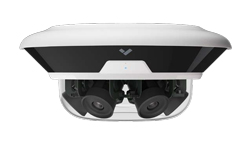 Technology selection follows the identified requirements. IP cameras and video analytics provide situational awareness, forensic evidence and tools for identifying relevant activity. Mobile credentials simplify access administration and reduce dependence on physical cards, while biometric readers strengthen identity verification in areas requiring additional controls. Centralized management platforms give authorized personnel oversight across multiple buildings and locations, with permissions and procedures tailored to each facility.
Technology Applied to the Operating Environment
Delivering an integrated security environment requires coordination with the people responsible for the facility. CTS works with IT departments, facilities personnel, life-safety teams, general contractors and third-party technology vendors to establish how security systems will interact with existing infrastructure and other platforms. This coordination brings engineering, field execution and compliance into the same project plan, helping maintain consistent requirements across facilities without overlooking site-specific needs.

Our responsibility doesn't end when a system is installed. We're accountable for how that system performs in the real world, how it supports the people operating it, and whether it continues delivering value long after the project is complete.

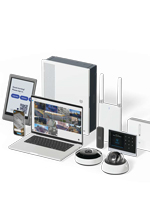 New construction projects require early coordination of pathways, power, network infrastructure, door hardware and life-safety requirements to ensure security needs are addressed before installation. Retrofit projects begin with an assessment of existing infrastructure, identifying components that can remain in service and those requiring replacement or modification. Compatibility, migration risks and continuity of operations guide implementation to minimize disruption.
Cloud-managed environments extend security administration across multiple locations. With the ability to support customers across Florida and beyond, CTS serves organizations operating multiple facilities across different geographic locations. CTS supports migration planning, credential management, alert configuration, system-health monitoring and standardized deployment. Authorized teams can administer multiple properties centrally while retaining site-specific permissions and operating procedures. Standardized deployment allows new facilities to be incorporated into the wider management structure without requiring each location to be managed independently.
Supporting Security Through the System Lifecycle
A major international sporting event in Miami demonstrated CTS's ability to deploy surveillance across multiple locations under demanding conditions. Seven transportation locations needed to connect to a centralized event-command environment, requiring rapid deployment and reliable remote connectivity without relying entirely on permanent infrastructure. The project called for distributed coverage, temporary infrastructure and dependable connections between remote sites and the central command environment.
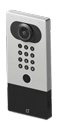 CTS deployed fixed cameras, cellular gateways, proprietary battery-powered connectivity systems and solar-supported mobile surveillance equipment. The deployment maintained 100 percent operational uptime throughout the event, demonstrating its ability to deliver security coverage where permanent infrastructure alone could not meet the requirements. Maintaining that performance required coordinated engineering and field execution, supported by operational attention throughout the event.
After installation, CTS tests camera fields of view, access-control functionality, credential behavior, alarm and event workflows, network communications and system integrations against the approved design and customer requirements. Customer acceptance testing and staff training prepare teams to operate the completed system. SLA-backed support, remote diagnostics, system-health reviews, preventive maintenance and onsite response help identify and address technical issues after handover, supporting continued system reliability.
CTS takes responsibility for how the complete security environment performs, not merely whether its components have been installed. Its ongoing involvement connects initial risk assessment and system integration with the technical support needed to sustain performance over time. Recognition as the Top Security Cameras & Access Control Solutions 2026 underscores this engineering-led approach. For organizations operating across multiple facilities, CTS brings system design, deployment and lifecycle support together to address security requirements as infrastructure and operations evolve.
What Matters in Security Camera and Access Control Selection
Buying more cameras rarely fixes the problem. The old ones give grainy footage, nobody can pull up a feed from off site and the access control system sits in a corner with no connection to video at all. Add devices to that and you own more hardware and the same headaches. Start with the building instead. Where do people actually walk? Which rooms would hurt most if someone got into them? What cabling is already in the walls, and what is supposed to happen when an alarm goes off? Those answers decide what goes in and who runs it.
A good design can account for every piece in it. Ask why a camera sits where it does, how much detail that camera needs to catch, who issues a credential and who takes it away, how the network carries all of it. Every answer should trace back to something seen on a walkthrough, not to a product the vendor likes selling. Power and the cabling already in the building shape the design as much as anything on a datasheet. Get that right and a security team knows what it is paying for, and stops paying for features that solve nothing.
Long feature lists make the choice harder, not easier. IP cameras, video analytics, mobile credentials and biometric readers all do different jobs, and trading one for another is not an upgrade. A server room might genuinely need a fingerprint reader. A warehouse three states away probably cares more about whether anyone can see the feed at all, or how fast a credential dies when someone quits. What matters is not how much a provider stocks. It is whether they can shape the system around the way the place runs.
“CTS walks the site first, assesses the risk, engineers a design around what it finds, then stays for integration, commissioning, training and everything after.”
Retrofits test all of this. Some cameras and switches already up there still earn their keep. Others do not, and a provider should say in writing which are which and where compatibility gives out. The changeover needs planning too, because a building cannot go dark halfway through and nothing important should end up stranded on a platform the manufacturer has abandoned. New builds flip the problem. Power, conduit, door hardware and life-safety coordination all have to be settled while changing your mind still costs a phone call rather than a wall.
Several sites complicate things further. A cloud-managed platform spares an administrator from logging into a dozen separate systems, though standardizing everything can iron out differences that ought to stay. One site opens at five in the morning. Another never closes. One has a guard on the door and another has nobody after six. Growth counts as well, because adding the eleventh building should not mean rebuilding how the first ten are run. Ask how far a provider’s architecture stretches before local control starts to disappear.
Commissioning deserves as much attention as design and almost never gets it. Installed is not the same as working the way the drawings promised. Before anyone signs, test the devices, open the doors with real credentials, set the alarms off and confirm the integrations hold up. After that, the questions worth asking are simple. Can the provider spot a failing camera before anyone in the building notices? Does maintenance happen on a schedule or when something breaks? How quickly does somebody actually turn up?
CTS walks the site first, assesses the risk, engineers a design around what it finds, then stays for integration, commissioning, training and everything after. New builds and retrofits both, including the thankless job of getting old infrastructure and third-party platforms to cooperate. CTS also supports cloud-managed video surveillance and access control across multiple locations while allowing site-specific permissions and procedures. Nothing changes hands until the devices and integrations have been checked against the approved design, and the customer’s own people have been trained to run the system. For anyone who values a rigorous design and a clean migration over a long datasheet, CTS is worth a look.
...Read more
Company
CTS
Management
Jim Ecklund, CEO and Craig Bruce, COO
Description
CTS delivers fully integrated physical security ecosystems designed, deployed and supported to protect people, infrastructure and operations across complex environments. Combining engineering expertise, field execution and lifecycle support, CTS provides scalable video surveillance, access control and security infrastructure solutions for commercial, government, industrial and specialized facilities.
