
THANK YOU FOR SUBSCRIBING
× 
Enterprise Security Mag Weekly Brief
Be first to read the latest tech news, Industry Leader's Insights, and CIO interviews of medium and large enterprises exclusively from Enterprise Security Mag
A featured contribution from Leadership Perspectives, a curated forum for enterprise security leaders, nominated by our subscribers and vetted by the Enterprise Security Magazine Editorial Board.

TAO Group
Building Integrated, Intelligence-Driven Security Cultures
Leadership Shaped in Real-World Complexity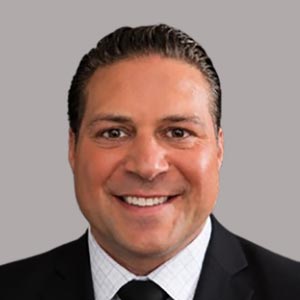
Gregory Soto
My approach to leadership in security and threat management has been shaped less by textbooks than by moments when the plan didn't hold — when a threat emerged faster than protocol anticipated, or when the human element introduced a vulnerability no one could fully account for, and a leader calmly stepped up and called an audible. I’ve seen this as a young Trooper with the NJ State Police during a catastrophic interstate accident, as a field operations leader on an international private security detail, and as Director of Security for Tao Group during a high-profile event.
Early in my career, I learned that the most dangerous gaps rarely exist in technology or policy. They live between departments — in assumptions about who owns a risk or task. That realization pushed me to lead across functions, building relationships with legal, Risk Management, HR, IT and operations long before any incident required it.
When a crisis arrives, trust is not built in the moment. These relationships must already exist so teams can access the personnel and resources needed to respond quickly.
Over time, I’ve also learned that leadership is about culture. Policies without buy-in are meaningless. My most meaningful work has been shifting organizations from reactive postures to proactive ones, where people at every level feel ownership over safety and hold one another accountable.
Managing enterprise-level threats has taught me to lead with clarity under ambiguity. Rarely do you have complete information when decisions must be made. The leaders I respect most assess risk quickly, communicate transparently and adapt without losing team confidence.
The best leaders are fair, firm and hold one standard. “Surpassing the standard is the standard” is something I was taught early and apply daily. Whether enabling seamless operations, optimizing resources, or reducing risk exposure, leaders must pivot quickly and guide their teams with clarity and purpose.
Navigating a Converging Risk Landscape
One of the most pressing modern security challenges is the convergence of physical and digital threats. A breach rarely begins and ends in one domain. A tailgating incident can expose sensitive systems, while a compromised credential can unlock physical access. Organizations must adopt an integrated security posture where teams share intelligence and operate from a unified framework.
Culturally, organizations must reinforce accountability: we do not prop doors, share credentials, or ignore preparedness. Training and awareness must be embedded into daily operations.
Modern security must manage risks, prevent threats, mitigate disasters, and ensure business continuity — all while protecting civil liberties and privacy.
Security teams are often under-resourced relative to threat volume, and response delays are increasingly costly. The most underappreciated challenge remains the human factor. Technology can strengthen defenses, but it cannot eliminate insider risk — whether through negligence or intent. Building a security-aware culture remains critical.
Organizations must also navigate complex regulatory environments. Security leaders must translate risk into business terms and influence executive decision-making. I am fortunate to work with leadership that supports proactive action based on emerging threats.
Aligning Prevention with Rapid Response
In practice, this starts with thorough pre-shift briefings that are foundational to readiness. Equally important is fostering a culture of decentralized command, where individuals are empowered to make decisions and take ownership of their responsibilities.
Real-time intelligence sharing across teams and markets enhances situational awareness and enables early threat detection. Information silos create risk, while shared intelligence creates advantage.
“When a crisis arrives, trust is not built in the moment. These relationships must already exist so teams can access the personnel and resources needed to respond quickly.”
Strong relationships with law enforcement and industry peers are essential. These partnerships extend capabilities beyond internal teams and must be built consistently over time.
Ultimately, security is a team effort. Strong security cultures are built on accountability, trust, and the understanding that success depends on collective action.
Trends Driving Modern Security Strategy
Security is evolving into a data-driven, intelligence-led function. Physical security teams are increasingly leveraging data from multiple sources to provide insights not only for security but for broader organizational operations. Systems are becoming more integrated, combining surveillance, access control, analytics and intelligence sharing. The shift is toward proactive, intelligence-driven programs where technology and human insight function as a unified system.
At the same time, AI is accelerating the complexity of fraud. Sophisticated schemes now use synthetic identities created from blended real and fabricated data, making detection more difficult. These identities can bypass traditional systems and create significant risk.
Public-private collaboration is becoming essential. Through programs like the FBI Citizens Academy, security professionals are gaining access to expertise and building partnerships that strengthen collective defense strategies. These collaborations represent a critical path forward.
Building a Career in Security and Threat Management
My foundation began with the New Jersey State Police, where discipline and accountability shaped how I operate and lead.
I later transitioned to private security, supporting high-profile individuals globally and working alongside agencies like the United States Secret Service. This experience provided deep exposure to elite operations and coordination.
I then moved into corporate security with Madison Square Garden, overseeing security and intelligence for Tao Group Hospitality across major cities and leading security for high-profile events including the Super Bowl, Sundance and Coachella.
The consistent thread in my career has been continuous growth. Pursuing a Master’s degree in Homeland Security expanded my perspective and reinforced the importance of evaluating risk through multiple lenses.
For those entering the field, my advice is practical: begin in law enforcement, intelligence or the military. These environments build discipline, decision-making and situational awareness that cannot be replicated elsewhere.
Invest in yourself continuously. Pursue education, develop physical and mental discipline and gain real-world experience. Build strong relationships with law enforcement and industry peers — these connections are invaluable and must be maintained over time.
Read widely, across disciplines including intelligence, geopolitics and leadership. The security landscape evolves constantly, and staying relevant requires ongoing learning. Mastery in this field is not a destination, but a daily commitment.
The articles from these contributors are based on their personal expertise and viewpoints, and do not necessarily reflect the opinions of their employers or affiliated organizations.
